
Our Story
He Grows It, Processes It, and Builds With It.
Wade Atteberry is one of the few people in this industry who can speak with authority about every step from seed to finished wall.
How It Started
Wade Atteberry came to hemp from the trades. He started swinging a hammer at 15. By 18, he was running a drywall company with 36 people on the payroll. He survived cancer twice — a tumor the size of a football attached to his heart — rebuilt his business both times, and never had a complaint filed against his contractor's license.
His introduction to hempcrete came around 2012 through Chris Boucher, who had been working with hemp for decades. By 2019 Wade was all in. He hosted a talk radio show, founded one of the earliest CBD Vape companies, invented the Patented DeBudder bucket lid. He patened a process to make Hemp fiber insulation nearly fireproof along with several other patents in his name. But by 2019, his focus had moved from what hemp could do for the body to what it could do for a house.
He founded Tiny Hemp Homes that year. What followed was years of living at a working cotton gin in California's Central Valley, growing his own crop, building a spray machine around his unique silage-cut hemp, and testing his ideas in homes he built, lived in, and took apart to see what worked.
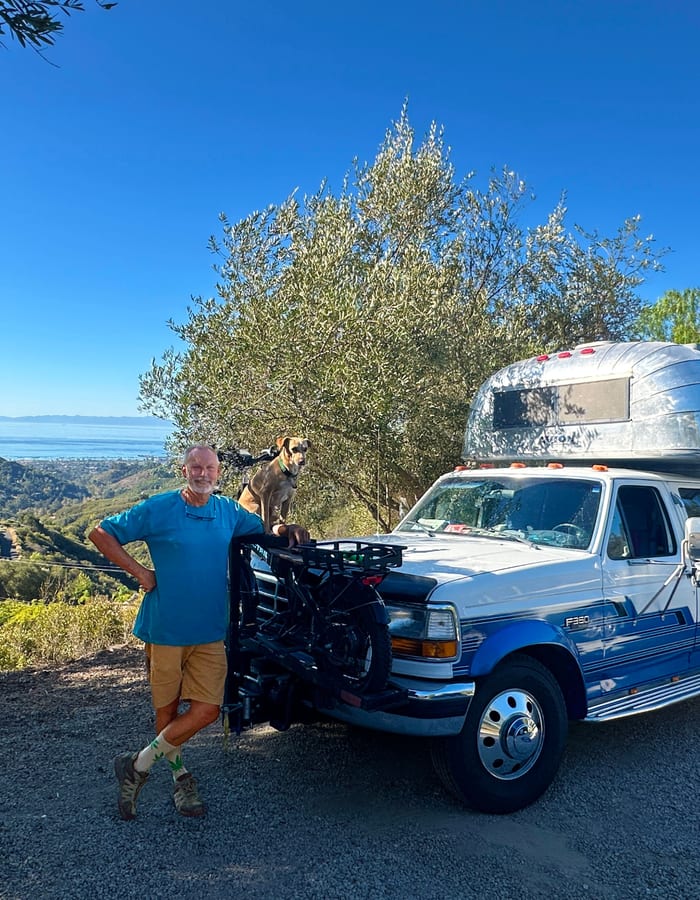
Founder
Wade Atteberry
Founder & CEO
"Yes, we can build our way out of the CO2 climate crisis."
Wade is a construction professional, hemp-industry innovator, and patented inventor with more than 30 years of construction experience. As founder and CEO of Tiny Hemp Homes, he combines practical building knowledge with a commitment to teaching the next generation of tradespeople. He served as project build manager at Oregon State University's Global Hemp Innovation Center for a Train-the-Trainer demonstration structure, and taught a hemp-building demonstration wall class at Cal Poly Humboldt. He is the inventor of U.S. Patent No. 11,712,590 B2 — Hemp Insulation Fire Retardant Applicator and Method — granted August 1, 2023 along with several other patents. His contractor's license has never had a complaint filed against it.
- —U.S. Patent No. 11,712,590 B2 — Hemp Insulation Fire Retardant Applicator and Method (granted Aug. 1, 2023)
- —Project Build Manager, OSU Global Hemp Innovation Center Train-the-Trainer, 2026
- —Instructor, Cal Poly Humboldt hemp-building demonstration wall
- —Former President, Hemp Farmers Guild
- —Business Development Officer , Western Fibers
- —Active in industrial hemp since 2012
What We Stand For
Our Mission
01
Carbon-negative by design
Every home we build sequesters more carbon than it emits over its lifetime. Hempcrete gets stronger and greener with every passing year as the lime binder re-absorbs CO₂ from the atmosphere.
02
Radical material honesty
Hemp hurd, lime, water, timber. No off-gassing synthetics, no mystery composites. Wade grows and processes his own hemp so he knows exactly what goes into every wall.
03
Built for scale
An interlocking double stud wall system, a factory spray machine, and a production facility in the Central Valley set up to produce homes at volume — because carbon-negative building only changes the world if it can reach the world.
04
Teaching as we build
Every person trained well is another crew that can carry this work forward. Wade has taught hempcrete from Ventura to Corvallis, and is developing a live-in green building workforce Academy for the next generation.
Workforce Development
Hemp Building & Workforce Institute
Building Skills. Building Careers. Building a Better Future.
Los Angeles needs skilled workers, affordable housing, climate-resilient construction, and meaningful career pathways for people who have historically faced barriers to employment. Wade Atteberry is building the answer: the Hemp Building & Workforce Academy— a hands-on school where participants don't just learn about sustainable construction. They build it.
Recruit → Train → Build → Certify → Employ → Advance
Funding Opportunity — Deadline Oct. 30, 2026
Los Angeles already has the infrastructure to support this. The City of LA Workforce Development Board oversees approximately $100 million in annual workforce funding, with a goal of connecting 50,000 Angelenos to quality, living-wage jobs by 2030. The City's Veterans Initiative Program provides career training and placement through WorkSource partners. The 2026–27 Angeleno Corps is placing 300 young adults ages 18–30 into paid hands-on experience with professional development and mentorship. The Institute is designed to plug directly into these existing systems.
What Students Learn
Hemp Construction
Hemp-based insulation, hemp-lime construction, material handling, and building systems.
Trades
Framing, carpentry, construction safety, job-site practices, and building fundamentals.
Manufacturing
How raw materials become usable building products — and how emerging construction materials can be manufactured at scale.
Building Science
Moisture, thermal performance, energy efficiency, durability, and healthy-building principles.
Entrepreneurship
Estimating, project management, business fundamentals, sales, and creating a pathway to self-employment.
Real-World Experience
Students participate in actual projects alongside experienced builders and industry partners.
Partners We Are Seeking
Workforce-Development Partner
To help structure and administer the program and connect it to existing LA workforce systems.
Educational Partner
To help develop credentials, curriculum, and certification pathways.
Industry Partner
To provide materials, mentors, equipment, factory tours, and employment pathways for graduates.
Facility Partner
Classroom, fabrication, and hands-on construction space in the Los Angeles area.
Philanthropic / Corporate Partner
Seed funding to launch the pilot and leverage public workforce dollars.
Government Partner
Connection to City and County workforce-development agencies and community-development programs.
Phase I target: $500,000–$750,000 to launch a pilot serving 20–30 participants. Phase II: $1M–$2M to build a permanent training center serving multiple cohorts per year.
The long-term vision is a replicable Pacific Coast model — Los Angeles → California → Oregon → Washington — training workers to participate in the emerging hemp-building economy while creating meaningful career pathways for people who need them.
Interested in partnering with the Institute? We are actively seeking workforce, educational, industry, facility, philanthropic, and government partners. Get in touch.
The Builder Network
Wade Atteberry's Network of Hemp Builders
Hempcrete is a young industry in North America. There are no large trade associations, no standardized certifications, and no established supply chains in most regions. What exists instead is a loose, active network of builders, researchers, farmers, and architects who share what they know — because the alternative is everyone reinventing the same wheel in isolation.
Wade has spent years building relationships across this network. At Oregon State University's 2026 Train the Trainer workshop, he worked alongside builders from nine hemp construction companies — Homeland Hemp, Hempire, Americhanvre, Aaron Grail Construction, Hempitecture, 8th Fire Innovations, Earth Merchant, and HempWood. His on-call core team includes business owners from Mexico and Canada, plus builders he has trained across California.
"Ninety percent of the people in this industry, I've got their back and they've got mine."
— Wade Atteberry
Shared mix data & build logs
Wade exchanges mix ratios, thermal performance results, and build documentation with builders across North America and Europe. When a builder discovers a better approach, that information moves through the network fast.
Emerging research & material science
Hemp cultivation, lime chemistry, and building science are all evolving. Wade stays connected to university research programs — including Oregon State University's Global Hemp Innovation Center — and material scientists working on next-generation hempcrete formulations.
Regional supply chain development
One of the biggest barriers to hempcrete in the US is sourcing. Wade has spent years at a working cotton gin in California's Central Valley developing the economics of growing close to processing — a model he believes is the key to making hempcrete affordable at scale.
Code & policy advocacy
With code pathways like IRC Appendix BL and engineers stamping hemp lime projects, permitted builds are coming. Wade works with architects and engineers to develop the documentation needed to get hempcrete permitted in jurisdictions that have never seen it before.
The People
Who Builds With Us
Wade leads every build. His on-call core team are all business owners themselves — including Stephen out of Mexico and Dion from Canada — plus builders he has trained in California. He brings in specialist subcontractors for electrical, plumbing, and roofing, and works with a rotating group of apprentices learning the trade.

Wade Atteberry
Founder & CEO
Trades background from age 15. Former president of the Hemp Farmers Guild. Grows, processes, and builds with hemp. Lead builder at OSU's 2026 Train the Trainer workshop.
Stephen
Core Builder
Based in Mexico. Part of Wade's on-call core team of business owners who have built together long enough to work without words.
Dion Lefebvre
Core Builder — 8th Fire Innovations
Based in Canada. Founder of 8th Fire Innovations. Worked alongside Wade at the Oregon State University demonstration build in June 2026.
Come see a build.
Wade hosts open build days on active projects. If you want to see hempcrete being mixed and placed in person, get in touch and we'll put you on the list.